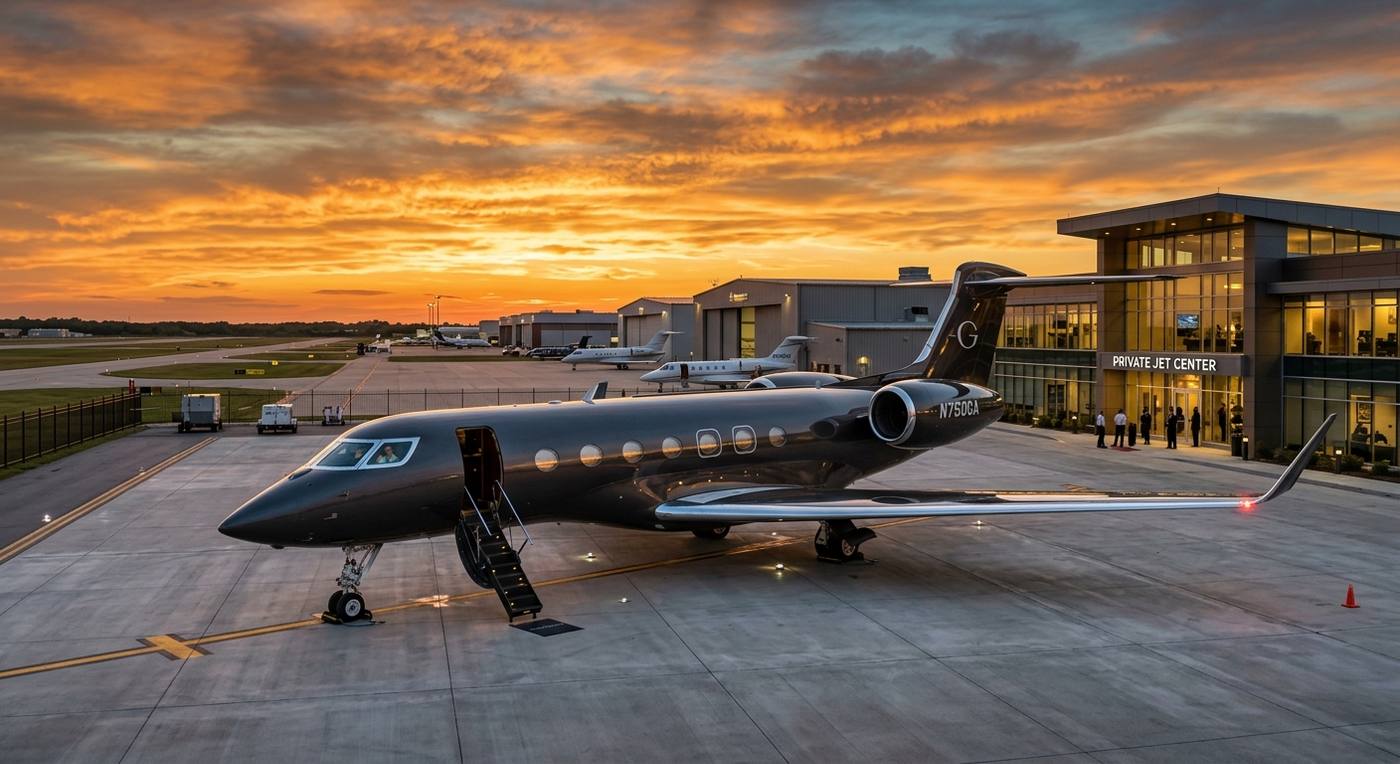
The conversation about valuing legacy heavy jets usually starts in the wrong place. Most family offices compare the headline asking price of a 15-year-old aircraft against a generic Vref book value and conclude they have found an incredible bargain. But that is not how aviation asset math actually works.
The real comparison is net asset value, accounting for the 36-month capital expenditure liabilities, engine program status, and upcoming calendar inspections. Once you run those numbers honestly, the gap between a "$3 million deal" and an "$8 million liability" becomes glaringly obvious, and for poorly maintained aircraft, the perceived value frequently disappears entirely.
This is the comparison traditional aircraft brokers prefer you don't calculate until after the purchase agreement is signed.
The Fundamental Difference Most Comparisons Miss
When you buy a piece of commercial real estate, you are purchasing an asset whose value fluctuates based on predictable market conditions. When you buy a legacy heavy jet, you are purchasing a complex bundle of maintenance liabilities attached to an airframe.
That distinction matters enormously for how you calculate value. A traditional market comp looks at the model year and total airframe hours. A sophisticated buyer looks at the maintenance calendar. The moment an aircraft enters its heavy inspection window, the baseline valuation math completely falls apart. Read more about how these thresholds affect long-term valuation in our analysis on 2026 heavy jet residual values.
The second thing most comparisons miss is the risk transfer cost. A buyer assumes that a 2000 Gulfstream IV & IV-SP priced at $3.5 million is comparable to another 2000 GIV-SP priced at $4.5 million. But if the cheaper jet has unenrolled engines and an impending 192-month check, it actually costs millions more. That hidden liability has a massive dollar value, particularly for family offices managing fixed capital budgets.
Heavy Jet Pricing in 2026: What You Actually See on the Market
Headline pricing varies significantly by model year, engine status, and total time. Here is a realistic view of 2026 market asking rates based on the heavy jets in our brokered portfolio:
| Aircraft Model | Asking Price Range | Typical Production Years |
|---|---|---|
| Challenger 601-3A | $1,200,000–$2,200,000 | 1987–1993 |
| Challenger 604 | $1,800,000–$3,500,000 | 1996–2006 |
| Challenger 650 | $11,000,000–$16,500,000 | 2015–Present |
| Gulfstream IV & IV-SP | $2,250,000–$5,850,000 | 1985–2002 |
| Legacy 650 | $6,000,000–$10,500,000 | 2011–2019 |
| Dassault Falcon 900 Series | $3,500,000–$8,500,000 | 1986–2010 |
| Gulfstream G450 | $7,000,000–$12,500,000 | 2005–2018 |
| Bombardier Global 5000 | $9,000,000–$15,000,000 | 2005–2019 |
| Dassault Falcon 8X | $24,000,000–$36,000,000 | 2016–Present |
A few things these numbers do not capture: the maintenance status matters a great deal. An aircraft with engines fully enrolled on Rolls-Royce CorporateCare and modernized avionics commands a heavy premium. The $2.25 million minimum asking price on a GIV-SP generally reflects an aircraft that is highly exposed to imminent, mandatory capital requirements.
True Acquisition Pricing in 2026: Asking Rate vs. Capital Requirement
Private jet valuation is governed by the maintenance schedule, not just the asking price. The moment you add pending capital expenditures, the numbers look very different.
Common Maintenance and Upgrade Liabilities (2026)
| Capital Event | Estimated Cost | Typical Interval |
|---|---|---|
| Heavy Airframe Check (e.g., 192-Month / 10-Year) | $1,000,000–$1,500,000 | 10–16 Years |
| Engine Overhaul (Unenrolled Rolls-Royce / GE / Honeywell) | $2,000,000–$3,800,000 | 6,000–8,000 Hours / Mid-Life |
| Cockpit / Avionics Modernization | $400,000–$600,000 | Functional Obsolescence |
| Paint and Interior Refurbishment | $500,000–$800,000 | Owner Discretion |
Now here is what happens when you apply those liabilities to a seemingly "cheap" heavy jet purchase:
| Aircraft Status | Asking Price | Pending Liabilities | True Equity Cost | Vref Baseline |
|---|---|---|---|---|
| Gulfstream IV & IV-SP (Turn-key) | $5,500,000 | $0 | $5,500,000 | $3,500,000 |
| Gulfstream IV & IV-SP (Due for 192-Month Check) | $3,500,000 | $1,200,000 | $4,700,000 | $3,500,000 |
| Bombardier Global 5000 (Enrolled Engines) | $11,500,000 | $0 | $11,500,000 | $9,500,000 |
| Bombardier Global 5000 (Unenrolled Engines) | $9,000,000 | $3,500,000 | $12,500,000 | $9,500,000 |
The unenrolled Global 5000 puts the true cost at $12,500,000. The fully enrolled, turn-key Global 5000 is listed at $11,500,000. The gap is real, and the "cheaper" jet actually costs a million more in practical equity—and that is before you add the time value of money lost while the aircraft sits in a maintenance facility for four months.
The True Capital Comparison
Asking price alone does not tell the complete story. Total capital committed over the first 36 months of ownership is the honest unit of measurement. Here is what a typical acquisition looks like when you account for the full financial picture.
Gulfstream IV & IV-SP Acquisition: Bargain Jet vs. Premium Jet
| Cost Element | "Bargain" GIV-SP | "Premium" GIV-SP |
|---|---|---|
| Initial Purchase Price | $2,800,000 | $5,500,000 |
| Pending 192-Month Inspection | $1,200,000 | $0 (Freshly Completed) |
| Cockpit Upgrade (e.g., DU-885) | $450,000 | $0 (Installed) |
| Paint and Interior Refresh | $500,000 | $0 (Completed recently) |
| Engine Program Buy-In/Overhaul | $2,000,000 | $0 (Fully Enrolled) |
| Total 36-Month Capital Requirement | $6,950,000 | $5,500,000 |
| Capital Saved by Buying "Premium" | — | $1,450,000 |
For a family office managing liquid wealth, avoiding the $1.45M in unrecoverable capital expenditure has massive financial value. Furthermore, buying the turn-key aircraft avoids four to six months of downtime, which begins to offset the higher upfront price immediately.
What Baseline Market Comps Actually Give You (and What They Do Not)
Standard valuation books like Vref or Aircraft Bluebook are genuinely excellent for establishing a historical baseline. They analyze transaction volume, fleet demographics, and general depreciation curves.
Here is what standard comps deliver well:
- Establishing a historical floor and ceiling for a specific model year
- Providing loan-to-value (LTV) guidelines for traditional aviation lenders
- Tracking broad market momentum and inventory levels
- Providing a baseline for insurance hull valuations
Here is what baseline comps cannot give you:
- Immediate Cap-Ex Exposure: A standard comp gives an average deduction for an upcoming inspection, but it cannot account for the hidden corrosion or secondary findings that invariably plague older aircraft during deep structural teardowns.
- Engine Program Transferability: Standard comps assume engines are either enrolled or unenrolled. They do not account for the massive pro-rated "buy-in" fee required if the previous owner missed payments or deferred required service bulletins on a power-by-the-hour program.
- Avionics Obsolescence: A legacy aircraft might have legally compliant avionics, but a generic comp doesn't distinguish between an airframe that barely meets minimum mandates and one that has a fully modernized flight deck.
- Maintenance Pedigree: Need to trace every part back to its origin? On a legacy jet, a missing logbook from 2008 can ground the aircraft indefinitely. Standard pricing models cannot account for the massive risk discount applied to poorly documented aircraft.
When the "Budget" Aircraft Wins
Buying the cheapest 15-year-old heavy jet on the market is not the right answer for every situation. There are clear scenarios where taking on a distressed or maintenance-heavy aircraft is the smarter choice:
- You own an MRO facility: If your family office also owns an aviation Maintenance, Repair, and Overhaul (MRO) business, you can perform heavy airframe checks and interior refits at cost rather than retail rates. This makes buying a "run-out" aircraft a highly profitable arbitrage opportunity.
- You plan to part out the aircraft: If the per-component value of the engines, APU, and avionics exceeds the airframe asking price, buying a distressed jet purely for salvage delivers genuine ROI at a more accessible price point.
- You need a highly customized interior: If you are going to rip the entire cabin down to the bare bulkheads to install a bespoke layout anyway, paying a premium for a pristine interior is wasted capital. Buy the cheapest airframe and build it back up.
When the "Premium" Aircraft Wins
There are scenarios where paying top dollar for a turn-key aircraft tips decisively in your favor:
- You need immediate lift: If you are acquiring an aircraft because you need to fly 300 hours this year, a "project" jet will leave you stranded. A fully enrolled, freshly inspected aircraft removes the downtime equation entirely.
- You are financing the purchase: Aviation lenders hate maintenance risk. It is significantly easier to secure favorable lending terms for a $5.5 million jet with zero upcoming maintenance than a $3 million jet facing a $2 million engine overhaul.
- Capital predictability is paramount: For family offices where unexpected cash calls are highly disruptive to other investment strategies, buying an aircraft with fully funded engine programs and fresh inspections provides stable, predictable operating costs.
- Resale timeframe is short: If you plan to sell the aircraft in three to five years, buying a turn-key asset ensures it will still be marketable when you exit. Distressed assets become nearly impossible to sell as they approach their end-of-life cycle.
Aircraft-by-Aircraft Comparison: Baseline vs. Adjusted in 2026
| Model | Baseline Asking (Low) | Major Exposure Point | True Adjusted Value (If Unenrolled/Due) |
|---|---|---|---|
| Challenger 601-3A (1990) | $1,200,000 | Unenrolled CF34 Engines, 120-Month Check | $2,800,000+ |
| Challenger 604 (2002) | $1,800,000 | 96-Month Check, Landing Gear Overhaul | $3,300,000+ |
| Gulfstream IV & IV-SP (1998) | $2,750,000 | 192-Month Check, Legacy CRT Avionics | $4,500,000+ |
| Gulfstream G450 (2008) | $7,000,000 | Tay 611-8C Overhaul, ASC Compliance | $9,800,000+ |
| Legacy 650 (2012) | $6,200,000 | AE 3007A2 Engine Overhaul, 10-Year Inspection | $8,500,000+ |
| Dassault Falcon 900 Series (2000) | $3,800,000 | 3C/4C Check, Dry Bay Mods | $5,500,000+ |
| Bombardier Global 5000 (2007) | $9,000,000 | BR710 Engine Overhaul, 15-Year Inspection | $12,500,000+ |
True Adjusted Value is the total cost of the aircraft once you fund the immediate, mandatory capital requirements required to make it safely flyable for the next 3–5 years. Below that number, the seller is shifting the liability to you.
The Factors That Do Not Show Up in a Vref Comparison
A pure price comparison leaves out several factors that matter to most family offices evaluating these options:
- Downtime: A heavy calendar inspection takes roughly 12 to 16 weeks to complete. During that time, you are still paying fixed costs (insurance, crew salaries, hangar fees) plus the cost of chartering replacement lift. This hidden downtime cost easily exceeds $300,000. For an in-depth breakdown of operational math, review our fractional vs. charter break-even analysis.
- Supply Chain Risk: Procuring replacement parts for legacy aircraft is increasingly difficult. If an obscure actuator fails during a heavy inspection, the aircraft could be grounded for months waiting for a replacement.
- Logbook Integrity: A jet with continuous, unbroken maintenance logs managed by top-tier facilities commands a premium that generic comps ignore. A gap in documentation can render an aircraft unsellable on the open market.
- Charter Revenue Potential: If you plan to place the aircraft on a FAA Part 135 charter certificate to offset costs, it must meet strict avionics and interior standards. A heavily discounted "budget" aircraft rarely qualifies for high-revenue charter work without massive capital upgrades.
How to Decide: A Simple Framework
Use this framework to cut through the analysis:
Choose the "budget" aircraft if:
- You own your own MRO facility and can do heavy maintenance at cost.
- You are planning a complete, ground-up interior and avionics refurbishment.
- You are buying the asset primarily to part it out.
- You have an open timeline and no immediate need to fly.
Choose the "premium" turn-key aircraft if:
- You require predictable, stable annual operating costs.
- You are financing the acquisition through a traditional aviation lender.
- You cannot afford to have the aircraft grounded for 4–6 months.
- Your family office mandates strict risk avoidance regarding unforecasted capital calls.
- The aircraft must immediately enter service for business or charter revenue.
Run the actual numbers. Before defaulting to the cheapest listing on an aircraft broker's website, commission a deep logbook review. You may find that the most expensive listing is actually the cheapest aircraft to own.
Use our instant price estimator to get a baseline on any acquisition, or browse our inventory to see which aircraft fits your group size and range requirements.
Frequently Asked Questions
Is buying a 15-year-old heavy jet a bad financial decision?
No. A well-maintained legacy heavy jet offers incredible value, often providing intercontinental range and massive cabin volume for the price of a brand-new light jet. The financial danger lies entirely in misunderstanding the maintenance status, not the age of the airframe itself.
At what point does a legacy heavy jet become too expensive to maintain?
When the cost of the next heavy calendar inspection and engine overhaul exceeds the residual market value of the airframe. For example, spending $4 million to overhaul unenrolled engines on an aircraft that is only worth $3.5 million on the open market is financially unviable. At this point, the aircraft is usually sold for parts.
What does a turn-key aircraft offer that a budget aircraft does not?
Financial predictability. With a turn-key aircraft on full engine and airframe programs, you know exactly what your direct operating costs will be per hour. With a budget, unenrolled aircraft, you are entirely self-insuring against catastrophic component failures.
Can you use engine programs to offset a lower acquisition price?
If an aircraft is unenrolled, you can sometimes buy into a maintenance program (like Rolls-Royce CorporateCare) after the purchase. However, you will have to pay a massive pro-rated "buy-in" fee to cover the hours already flown. The cost is rarely lower than simply buying a fully enrolled aircraft upfront.
Is the premium priced legacy jet significantly better than the budget option?
Different is more accurate than better. The premium jet is a predictable, low-risk financial instrument. The budget jet is a highly volatile capital asset. Which matters more depends entirely on your family office's risk tolerance and in-house aviation expertise.
Ready to compare options for your next acquisition? Get an instant price estimate, explore our acquisition services, or talk to our team about the right option for your capital structure.
Thinking of Selling?
Get a comparable-backed valuation of your aircraft — confidential and free of obligation.